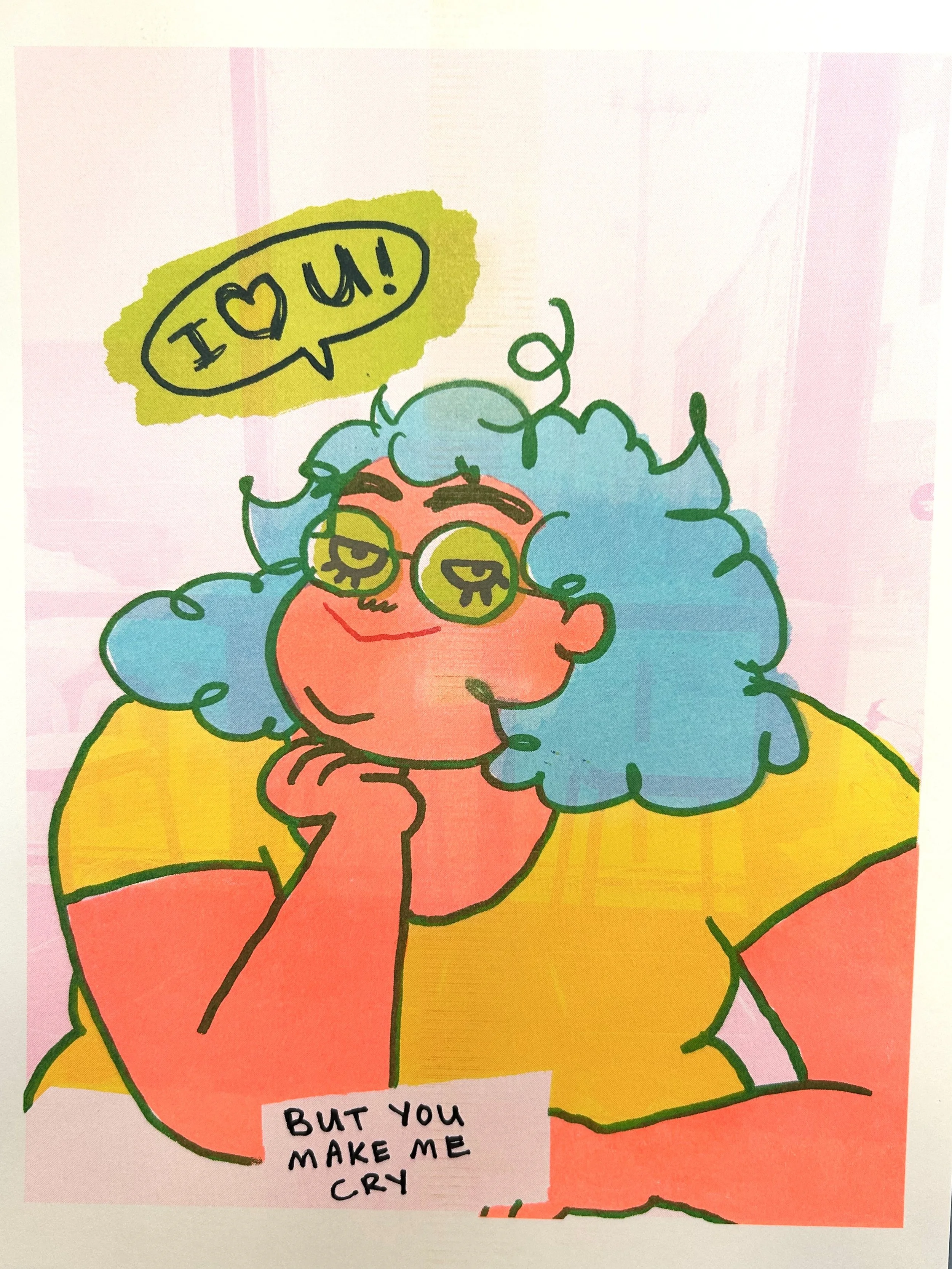
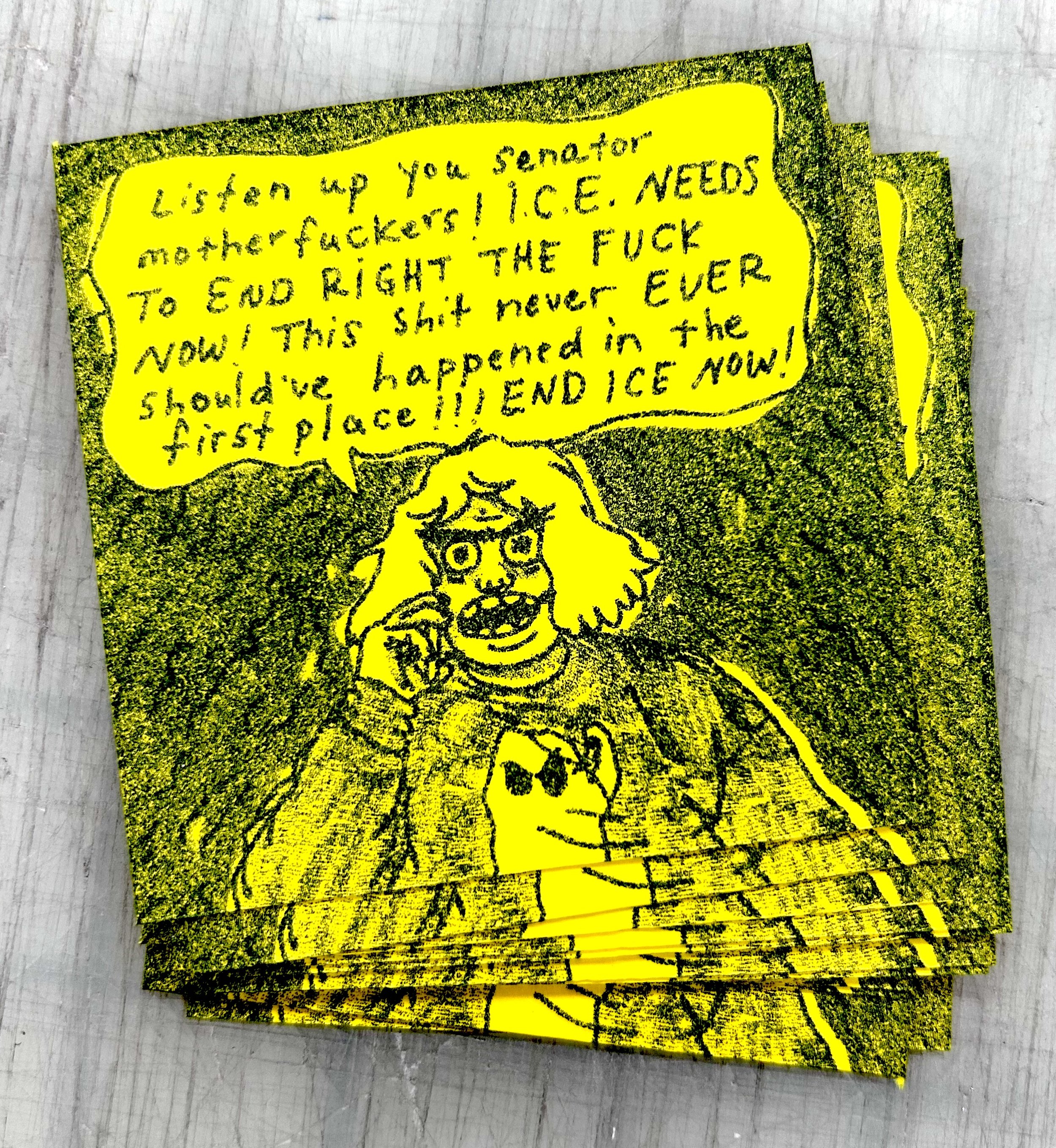
Risographs are very special to me because they have to do with community building, accessibility, and fun colors! Risos are often found in private studios, universities, some libraries, and artist residencies. I have been privileged enough to know people and have access to risographs throughout the years, especially the last few years.
I want to share why risograph printing matters to me and what my experience has looked like.
Why risographs matter
Community: Risograph studios naturally invite collaboration. Many of the places where Riso machines live—artist residencies, campus printshops, community arts spaces—encourage people to share time, ideas, and materials. Working at a Riso often means swapping inks, master copies, and techniques, and learning from others who bring different visual languages.
Accessibility: Compared with some print methods, Riso printing can be more approachable. Machines are relatively affordable to run, and the learning curve is forgiving. That makes it easier for students, emerging artists, and community groups to experiment without the barrier of costly equipment or exclusive workshops.
Color and playfulness: Riso inks are vivid and unpredictable in the best way. Layering transparent inks, registering imperfectly, and embracing texture create work that feels immediate and joyful. The color possibilities—neon pinks, deep cyan, warm oranges—encourage risk-taking and serendipity.
My Riso practice
Settings and people: I’ve used Risographs in a range of contexts: private studios with artist-operators, university print labs where students trade skills, library makerspaces that welcome the public, and residencies where time to experiment is a core part of the program. Each setting shapes the work—some runs are quiet and meticulous, others loud and communal.
Process: I usually start with a simple digital file separated into spot colors. From there I choose inks with an eye toward unexpected blends. I love intentional misregistration, halftone textures, and the slight noise the machine adds to flat fields. Short runs let me iterate quickly; longer runs let me push color shifts and subtle variations.
Collaboration: Some of my favorite pieces came from conversations—an idea sparked by another artist, a color combination suggested by a studio tech, a paper choice borrowed from a neighbor. Risograph culture rewards generosity: sharing supplies, helping press a sheet, or trading a few spare prints.
Examples of work
Small zines: Quick, inexpensive, and perfect for exploring colorways. I ran a series of zines where each issue tested a new duotone pair; some pages misregistered intentionally for a living, breathing look.
Postcards and posters: Single-color large areas with a second-layer halftone for texture. These made great giveaways at readings and small exhibitions.
Editioned prints: Short, signed editions where each print has subtle differences—ink density, slight overlays, or paper variation—so no two feel identical.
Experimental multiples: Folded, cut, and collage-like pieces that use Riso’s strengths—flat vivid color and grainy texture—to become tactile objects rather than just printed images.
Tips for starting with Riso
Embrace constraints: Limited color choices and registration quirks are not problems to hide but features to use. Design with transparency and overlap in mind.
Test before committing: Do a quick proof of color separations and registration. Tiny changes in density or paper can shift a color from muddy to brilliant.
Ask for help: Most Riso spaces welcome questions. The people who run them are often generous with time and knowledge.
Experiment with paper: Riso inks behave differently on coated vs. uncoated stocks and on thin vs. heavy paper. Try samples to see what each combination yields.
Keep runs short at first: Short runs reduce waste and let you iterate toward a stronger final result.
Final thought Risograph printing is part technical process, part social practice. It’s a way to make colorful, tactile objects and to connect with others who care about making things together. I’m grateful for the people and places that have made these machines available to me—and for the joyful surprises that Riso color always brings. Here are some risographs I made.